
Archive for May 2016
How Does the Brain Control Movement?
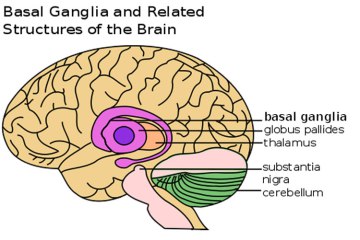
What if you couldn’t move faster even when you wanted to? Researchers thought that the part of the brain that determines how fast we perform voluntary movements, such as walking across a room or playing a melody on the piano, was a bit like a car. It has an accelerator to make movements faster and…
Read MoreReal ANT’s? Researchers build the world’s tiniest engine

Researchers have developed the world’s tiniest engine – just a few billionths of a metre in size – which uses light to power itself. The nanoscale engine, developed by researchers at the University of Cambridge, could form the basis of future nano-machines that can navigate in water, sense the environment around them, or even enter…
Read MoreBrain Prevents Anxiety by Suppressing Perception of Heartbeat

Not being aware of the pulse of our heart might prevent anxiety, EPFL scientists found. Our heart is constantly beating yet we normally do not feel it. It turns out that our brain is capable of filtering out the cardiac sensation so that it doesn’t interfere with the brain’s ability to perceive external sensations. For…
Read MoreSmartphone Apps Helping in the Emergency Room to Make Decisions

The concept of shared decision-making in healthcare is making its way from physician offices into emergency rooms as hospitals look to become more patient-friendly. Mobile apps are helping to accelerate the shift. A piece in the Wall Street Journal on Tuesday examined this trend. “Now, to help patients and families weigh the evidence and compare risks and benefits,…
Read MoreSamsung App Helping Premature Babies Hear Parents Voice

For babies, the sound of their mother’s voice isn’t just comforting — it can be the key to healthy brain development. That’s not easy to manage for premature babies stuck in incubators, though, and Samsung thinks smartphones might help out. Its Voice of Life app lets a mom record her heartbeat and voice on her phone,…
Read MoreDoppler ultrasound headset performs well at spotting sports-related concussion
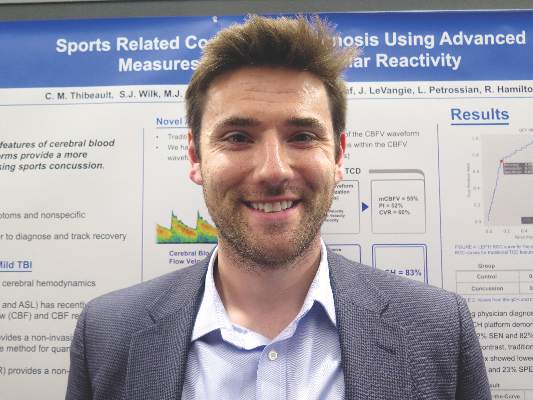
VANCOUVER – A new transcranial Doppler platform that analyzes subtle changes in the cerebral blood flow waveform performed well in detecting sports-related concussion in a cohort study of 238 Los Angeles high school athletes. The investigational headset device was able to differentiate between those with and without a recent concussion 83% of the time, investigators…
Read More