
Posts by rw-admin
Cartilage grown from stem cells could replace hip implants
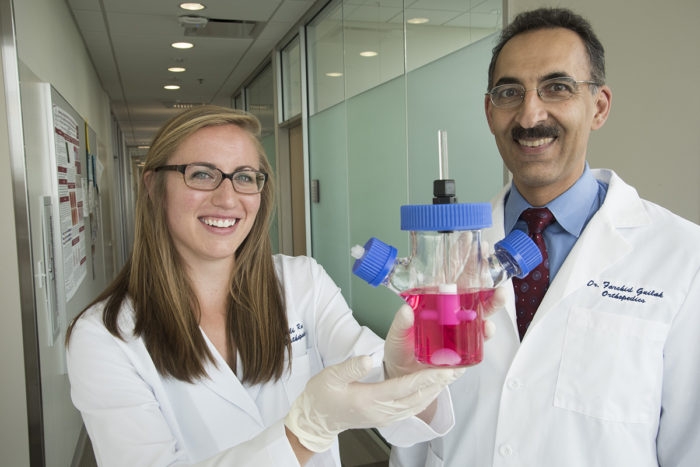
Researchers from the Washington University School of Medicine in St. Louis and Cytex Therapeutics have found a way to program stem cells to grow new cartilage on a 3-D template of the ball of a hip joint. This cartilage releases anti-inflammatory molecules that help fend off new occurrences of arthritis. This new technology could…
Read MoreMIPT Scientists Develop Ceramic-Based Laser

Scientists from MIPT and their colleagues have developed a compact and powerful ceramic-based laser with applications in minimally traumatic and inexpensive laser surgical scalpels, and also for cutting and engraving composite materials. The results of the study have been published in Optics Letters. Today, lasers are in consumer electronics devices, medicine, metallurgy, metrology, meteorology, and…
Read MoreNo, I Can’t Sit Down: What It’s Like Having an Open Wound that Will Never Heal

There I was, taking my final bow after 10 years of medical hurdles. I had done it. I actually wrote a one-woman musical about how I literally lost my stomach (when it ruptured in the operating room) and gained a story, appropriately titled, “Gutless and Grateful.” It was a big deal to finally compile all of…
Read MoreStanford University Neurosurgery Embraces Surgical Theater’s Virtual Reality Platform

Surgical Theater’s Virtual Reality (VR) medical visualization platform lands at Stanford University, Department of Neurosurgery, in the heart of Silicon Valley where medical innovation converges with technology to usher in the next-generation of patient engagement and health care. Stanford University leads the way in advancing medicine on multiple fronts from research to treatment. With Surgical…
Read MoreBeware! Antibiotic-Resistant Infections – 5 Combative Trends In Antimicrobial Medical Device Design

In the U.S., an average of two million people become ill with antibiotic-resistant infections each year, many of which have high mortality rates. On top of that startling statistic, the Affordable Care Act (ACA) has provisions that financially penalize facilities with high infection rates, and increasingly informed, connected healthcare consumers are using tools like Medicare’s Hospital…
Read MoreSurgical Robots of the Future Likely to be More Targeted & Provide Tangible Healthcare Benefits
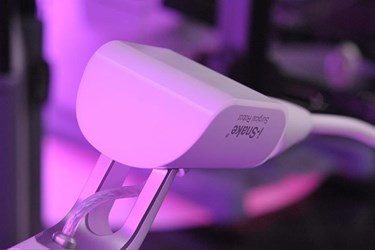
While robots have been in use since the 1960s, it is only 25 years since robotic technologies were first used to assist surgeons in improving surgical outcomes, providing such benefits as less trauma on the body, minimal scarring, and faster patient recovery times. Among the first robots to be deployed were ROBODOC and Acrobot, developed…
Read MoreStudy: More than 90 percent of strokes are preventable
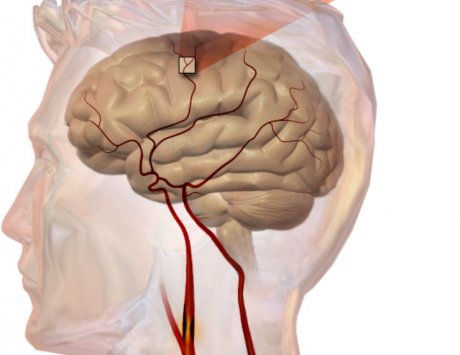
Strokes are one of the leading causes of death globally, but it turns out a vast majority of them could be prevented, according to findings published July 15 in the British journal The Lancet . According to the study authors, almost 91 percent of all strokes can be prevented through 10 healthy lifestyle changes and healthcare…
Read More3-D “Smart” Sutures for Real-Time Diagnostic Data
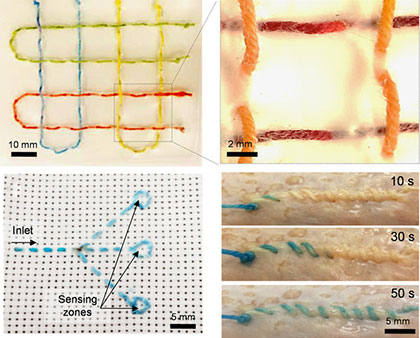
The field of smart wearable systems has just gotten a boost thanks to researchers from Tufts University. A team of engineers has developed a novel 3-dimensional thread-based diagnostic platform that, when sutured into tissue, collects a range of real-time diagnostic data wirelessly, including pH, glucose levels, temperature, stress, strain, and pressure. Physical and chemical nanosensors,…
Read MoreCan I trust WebMD? A hypochondriac’s nightmare and Big Pharma’s dream

Dear Julia: Can I trust WebMD? WebMD is the most popular source of health information in the US, and is likely to dominate your Google search results for almost any medical question you have. According to its editorial policy, WebMD promises to empower patients and health professionals with “objective, trustworthy, and accurate health information.” But is…
Read MoreGot Dense Breasts? That Can Depend On Who Is Reading The Mammogram
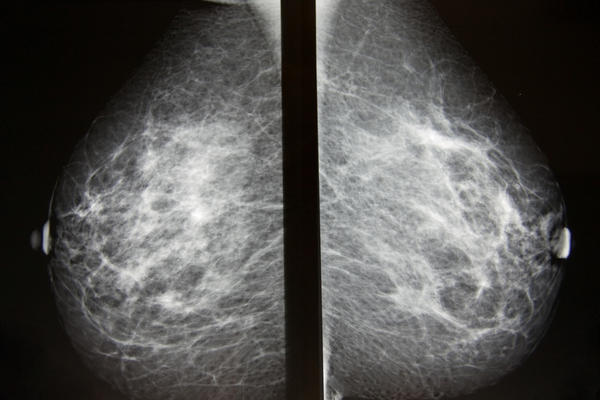
If you’re a woman who gets screening mammograms, you may have received a letter telling you that your scan was clear, but that you have dense breasts, a risk factor for breast cancer. About half of U.S. states require providers to notify women if they fall into that category. But what you may not know…
Read More