
Posts by cstephenson@legacymedsearch.com
Medical Errors, the 3rd Leading Cause of Death in the US

Recently, a study by Johns Hopkins made headlines by claiming that medical errors are now the third leading cause of death in the US. While that startling statistic was later challenged as being overly broad, it’s clear that over 100,000 people die in the US every year from preventable medical errors. The US Government…
Read MoreVirtual Reality Surgical System Coming to Rush University

The days of operating on female pigs are over for obstetrics and gynecology residents at Rush University Medical Center. The 24 doctors in the four-year program will practice surgeries on a virtual reality system beginning later this summer. Rush and People for the Ethical Treatment of Animals are splitting the $12,000 cost of the training…
Read MoreVirtual Reality – Why it’s the Future of Healthcare

Will 2016 be a year of virtual reality? This question has been discussed over the last six months in the major media outlets such as Fortune Magazine, BBC, Bloomberg, Venture Beat, and The Guardian. With Oculus Rift coming into retail, new generations of headsets, and growing amount of high-quality content, the technology is becoming a…
Read MoreChildren’s Health in Dallas to Pilot Ingestible Medication Sensors in Kids

Children’s Health in Dallas, Texas announced plans to use Proteus Digital Health’s ingestible medication sensors to track medication adherence in kids with liver and kidney transplants. Medication adherence is a challenge for many patients for a variety of reasons — the complexity of medication regimens, costs, memory, and more all play into it. That problem…
Read MoreOptimize Your Facebook Profile for Job Searching

LinkedIn isn’t the only social network for job searching. If you are like most people, you spend more time on Facebook than LinkedIn, so why not fix your Facebook profile to get it job-search ready? Use your “Intro” section wisely. Your intro is an important personal branding opportunity and viewable to anyone looking at your…
Read MoreThe Three Day Interview

Companies pay our firm a lot of money to uncover, interview, and recruit the right talent for their companies. So, it would make sense that hiring for our company would reflect the perfect storm of employees where there is minimal turnover, a refined onboarding process, and a group of happy, engaged employees. Until about three…
Read MoreFDA Approval for Polymer Molding in Medical Devices 101
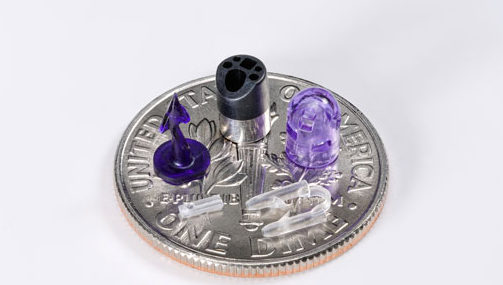
The recent FDA approval of Abbott’s Absorb GT1 Bioresorbable Vascular Scaffold (BVS) System is designed with a poly(L-lactide) polymer to fully dissolve in the patient’s body over about three years. Another FDA-approved offering in the coronary stent market is Boston Scientific’s Synergy bioabsorbable polymer drug-eluting stent, which has a drug coating and polymer used to elute…
Read MoreMazor Robotics Set to Receive $20M Investment from Medtronic

Medtronic PLC is preparing to invest another $20 million in Israeli med-tech company Mazor Robotics, which is expected on Tuesday to announce a new robotically assisted spine-surgery system called Mazor X. Analysts say physician interest in robotically assisted surgical tools is steadily growing, and Medtronic seems to be positioning itself to capitalize on the trend…
Read MoreVersa Capital Sets Their Eyes on SynCardia Systems, Creator of the Only FDA-approved Artificial Heart
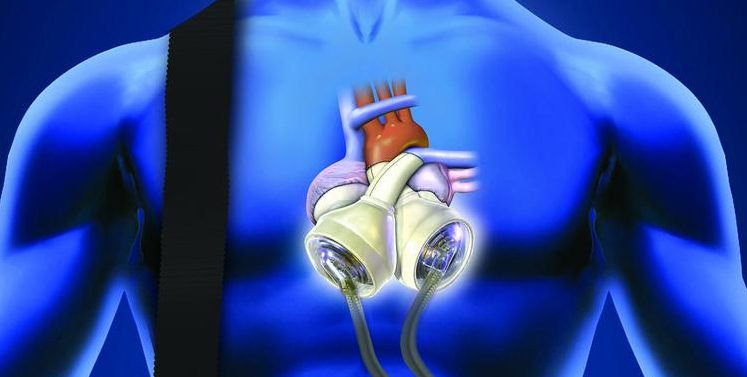
Artificial heart maker SynCardia Systems has filed for Chapter 11 bankruptcy reorganization with plans to sell all of its assets to a Philadelphia-based private-equity firm, according to reports in the Arizona Daily Star . Tucson-based SynCardia, maker of the world’s only U.S. Food and Drug Administration-approved artificial heart, will continue operations as an affiliate of…
Read More2.4 Million People Have a Congenital Heart Defects

An estimated 2.4 million people in the U.S. were living with congenital heart defects in 2010, a 40 percent increase from 2000, according to a recent analysis. Of those 2.4 million, 1.4 million were adults and 1 million were children. From 2000 to 2010, the proportion of adults with congenital heart defects rose 63 percent.…
Read More